iLines International
International Ocean Freight & Groupage

Choose the Right Space for Your Move Overseas

From smaller door-to-door groupage shipments to dedicated 20ft, 40ft, and 40ft High Cube containers, iLines International helps you choose a practical ocean shipping solution for your household goods and personal effects.

Ocean container vessel sailing with international freight
Shipping options

Full Container or Shared Groupage?

The best option depends on the volume of your belongings, where you are moving, and how much space you need. A dedicated container and groupage service are two different ways to ship overseas.

Dedicated Container — FCL

Full Container Load (FCL) gives your shipment dedicated use of a 20ft, 40ft or, where available, 40ft High Cube container. A good choice for larger household moves and some moves that include a vehicle. The container is planned around your shipment's dimensions, access and loading requirements.

Door-to-Door Groupage — LCL

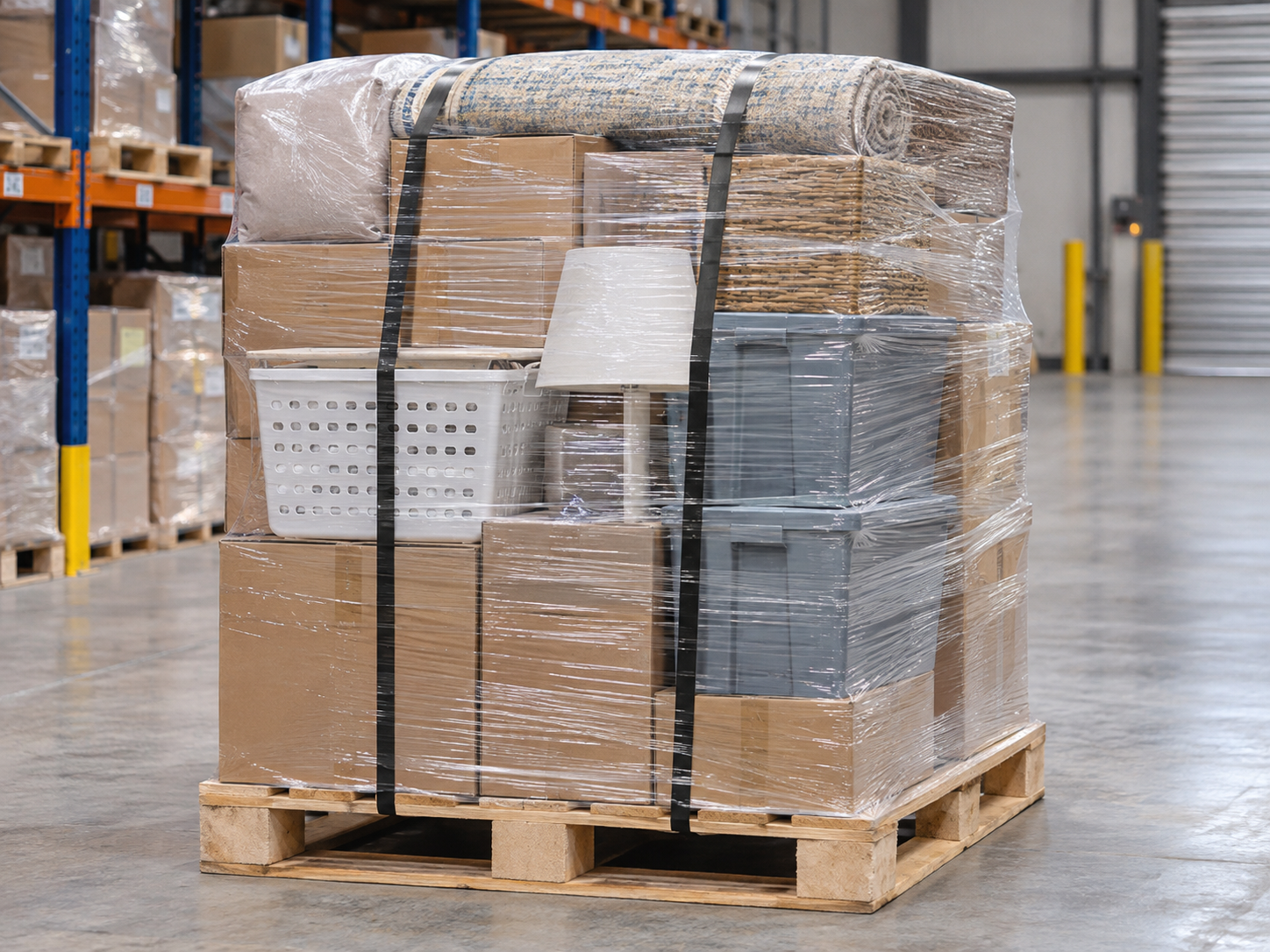
Groupage / Less than Container Load (LCL) lets a smaller household shipment share container space with other shipments. You pay for the space and services specified in your quote rather than booking an entire container. It is typically suitable for moving boxes, bins or totes, suitcases and similar personal belongings. Very small furniture items may also be accepted if they can be safely packed. A typical smaller Groupage shipment may use 2–3 standard-size pallets (48 × 40 in or 48 × 48 in), often totaling around 200–300 cubic feet after palletizing, or a lift van for a smaller crate-sized load (approximately 195 cubic feet of nominal lift-van volume). For both Groupage and standard LCL shipments, any pallets used must be plastic or heat-treated wood; untreated wooden pallets are not accepted.

20ft • 40ft • 40ft High Cube

Shipping Container Sizes & Interior Dimensions

Use these approximate interior measurements and cubic-foot capacities to get a sense of how much each container can hold. Home-size examples are planning guides—not guarantees of fit.

Smaller household move

20ft Standard

20-foot dry freight container

1,172 cu ft

Approx. 33.2 cubic meters (CBM)

Interior length
19 ft 4 in (5.90 m)
Interior width
7 ft 8 in (2.35 m)
Interior height
7 ft 10 in (2.39 m)

Typical household: Often suitable for the contents of an average 1–2 bedroom home, depending on furniture size and quantity.

Larger household move

40ft Standard

40-foot dry freight container

2,390 cu ft

Approx. 67.7 cubic meters (CBM)

Interior length
39 ft 5 in (12.03 m)
Interior width
7 ft 8 in (2.35 m)
Interior height
7 ft 10 in (2.39 m)

Typical household: Often accommodates the contents of an average 3–4 bedroom home, or potentially a 1–2 bedroom home plus one vehicle with a suitable loading plan.

Extra vertical space

40ft High Cube

Same length as 40ft, about 1 foot taller

2,694 cu ft

Approx. 76.3 cubic meters (CBM)

Interior length
39 ft 5 in (12.03 m)
Interior width
7 ft 8 in (2.35 m)
Interior height
8 ft 10 in (2.70 m)

Typical household: Well suited for larger or bulkier moves that need extra height for tall furnishings, bulky pieces and additional properly secured cartons.

Important: The cubic-foot figures above represent approximate total internal container volume, not the exact volume of household goods that can be loaded. Furniture shapes, protective packing, safe stacking, weight limits, door clearance and securing space reduce usable capacity. Container dimensions also vary slightly by manufacturer and carrier.

At a Glance: What Is the Difference?

Container TypeInterior Size — L × W × HApprox. CapacityCommon Household Planning Example
20ft Standard19'4" × 7'8" × 7'10"1,172 cu ft / 33.2 CBMAverage 1–2 bedrooms
40ft Standard39'5" × 7'8" × 7'10"2,390 cu ft / 67.7 CBMAverage 3–4 bedrooms; or 1–2 bedrooms + a vehicle, where feasible
40ft High Cube39'5" × 7'8" × 8'10"2,694 cu ft / 76.3 CBMLarger or taller household goods; extra stacking height

All interior measurements are rounded for readability. High Cube provides roughly 13% more internal cubic volume than a regular 40ft container while maintaining approximately the same floor footprint. Standard 20ft/40ft door opening heights are around 7'6"; 40ft High Cube doors are around 8'6".

Reference specifications: 20ft · 40ft · 40ft High Cube (Hapag-Lloyd). Actual supplied equipment may differ.
Choosing confidently

What Size Container Does Your Home Need?

Bedroom counts are helpful starting points, but an inventory survey provides the best way to choose. Two homes with the same number of rooms can have very different shipping volumes.

A quick guide based on household size

  • 1–2 bedroom home: A 20ft container may be sufficient for an average inventory.
  • 3–4 bedroom home: A 40ft container is frequently the starting point.
  • 1–2 bedrooms plus a vehicle: A 40ft container may work when the vehicle and furniture fit safely.
  • Large, bulky or tall household goods: Consider the extra vertical room in a 40ft High Cube.

Shipping your household goods with a car?

A 40ft container can sometimes combine a vehicle with the contents of a 1–2 bedroom home. However, this must be checked against the vehicle's length, width and height, the remaining furniture inventory, safe loading and securement requirements, and import regulations.

Vehicle loading is not guaranteed by bedroom count alone. Contact our team for an inventory-based loading plan and to confirm whether combining a vehicle and household goods is permitted on your route.

Learn more about international vehicle container shipping →
Convenience for smaller moves

Don't Need a Full Container? Try Door-to-Door Groupage

If you are shipping a smaller quantity of boxes, bins/totes, suitcases, similar personal belongings or a few very small furniture pieces that can be safely packed, our consolidated groupage service may be more practical than booking an entire container. We combine compatible shipments for efficient ocean transport and arrange delivery services according to your quote.

Photorealistic illustrative view of wrapped boxes, plastic bins and small household items secured on a standard shipping pallet inside a warehouse
Illustrative example of household goods prepared on a shipping pallet with protective stretch wrap and securing straps. Pallet material and heat-treatment requirements are specified alongside.
How palletized Groupage shipments are prepared

What Does a Packed Shipping Pallet Look Like?

Moving boxes, bins, suitcases and similar belongings are stacked onto a pallet, protected with wrap or suitable securing materials, and prepared for forklift handling and loading into a shared container.

Standard pallet footprints
48 × 40 in or 48 × 48 in
Maximum recommended loaded height
72 in total, including the pallet
Acceptable pallet materials
Plastic or heat-treated wood only

For both Groupage and standard LCL shipments, untreated wood pallets are not permitted. Heat-treated wooden pallets must meet applicable export/import marking requirements. The photographed shipment is an example of the packing method; accepted dimensions and treatments are verified separately.

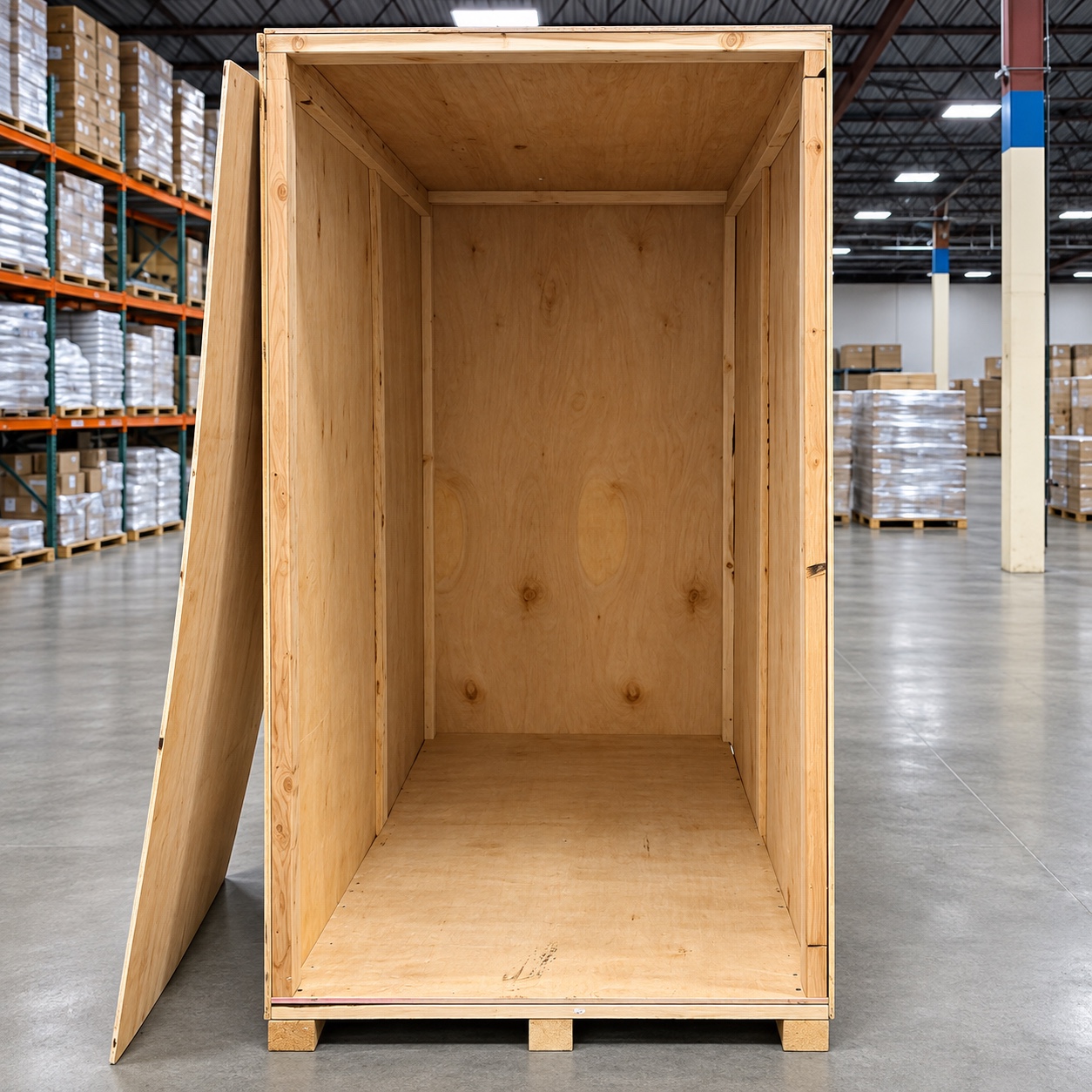
Entire open wooden export lift van in warehouse, showing the full wooden crate, its side door panel, and all bottom skids
Photo for reference only. Lift van construction, appearance and actual dimensions may vary.
A closer look at lift vans

What Is a Lift Van, and How Big Is It?

A lift van is a sturdy, enclosed plywood export shipping crate built on skids for forklift handling—not a road vehicle or van. It holds safely packed moving boxes, suitcases, totes and other personal effects during international shipping.

Typical outside dimensions (L × W × H)84¾ × 45 × 87 inchesAbout 7' 0¾" long × 3' 9" wide × 7' 3" high
Estimated inside dimensions (L × W × H)≈82 × 43 × 83 inchesApproximately 6' 10" long × 3' 7" wide × 6' 11" high; for planning only
Nominal exterior crate volume≈195 cu ftApprox. 5.5 CBM
Estimated usable inside volume≈170 cu ftApprox. 4.8 CBM
ConstructionWooden export crateForklift-ready skids

The 84¾ × 45 × 87-inch exterior dimensions are published for a typical Type II lift van. The 82 × 43 × 83-inch inside dimensions are an illustrative planning estimate, not a manufacturer-certified specification; wall panels, framing, floor, roof and door opening can reduce clearance. The approximately 170 cu ft of usable inside space is a general industry guideline, not the same as the nominal 195 cu ft crate volume. Exact internal measurements and door clearance must be confirmed before loading, especially for small furniture. The 72-inch recommended loaded height applies to pallets, not to a separately constructed lift van.

01

Share Container Space

Book the space your belongings require rather than paying for exclusive use of a full 20ft or 40ft container.

02

Coordinated Door-to-Door Services

Ask about collection, packing, consolidation, export, customs coordination and destination delivery options.

03

Clear Destination Charges

Our qualifying door-to-door groupage quotations include destination port and terminal handling charges (DTHC); confirm all included services and exclusions in writing.

International groupage destinations

Convenient Shipping to Popular Overseas Destinations

iLines International offers consolidated groupage solutions on qualifying services to the United Kingdom, Europe, Australia, New Zealand, the United Arab Emirates and South Africa. Available routes, collection areas, sailing schedules and destination charges depend on your shipment and the written quote.

United KingdomEurope / EUAustraliaNew ZealandUnited Arab EmiratesSouth Africa

Where applicable, our groupage pricing includes destination port / terminal handling (DTHC) fees to reduce surprises. Customs duties, taxes, inspections, storage and special delivery services are separate unless specifically stated in your estimate.

Frequently Asked Questions

How much does a 20ft container hold in cubic feet?

A standard 20ft dry container has approximately 1,172 cubic feet (33.2 CBM) of total interior space. The amount of packed household goods you can load will generally be less due to safe stacking and packing requirements.

Does a 40ft container hold double the belongings of a 20ft container?

A 40ft dry container provides a little more than twice the internal volume of a 20ft container (about 2,390 vs. 1,172 cubic feet). Actual usable capacity depends on how your furniture and boxes are arranged.

What is the difference between a 40ft and a 40ft High Cube?

A High Cube is approximately one foot taller inside and has a taller door opening, while the interior length and floor area are approximately the same. This adds about 304 cubic feet (around 13%) of gross internal volume.

Can I ship household goods and a car together in one container?

Potentially. A 40ft container can sometimes accommodate a vehicle and the contents of a 1–2 bedroom home, provided dimensions, approved loading/securement methods and destination customs rules permit it. Ask us to assess your inventory and vehicle.

Is groupage the same as renting a container?

No. Groupage lets multiple shippers share the space of one container. A Full Container Load (FCL) provides dedicated use of a container. We can advise which service fits your move.

iLines International

We'll Help You Choose the Right Container

Tell us your origin, destination, household inventory, preferred shipping date and whether you are including a vehicle. We'll help you compare a dedicated container with groupage based on your needs.

866-898-1841